



Product Photo Gallery
Watch a video demonstrating the device
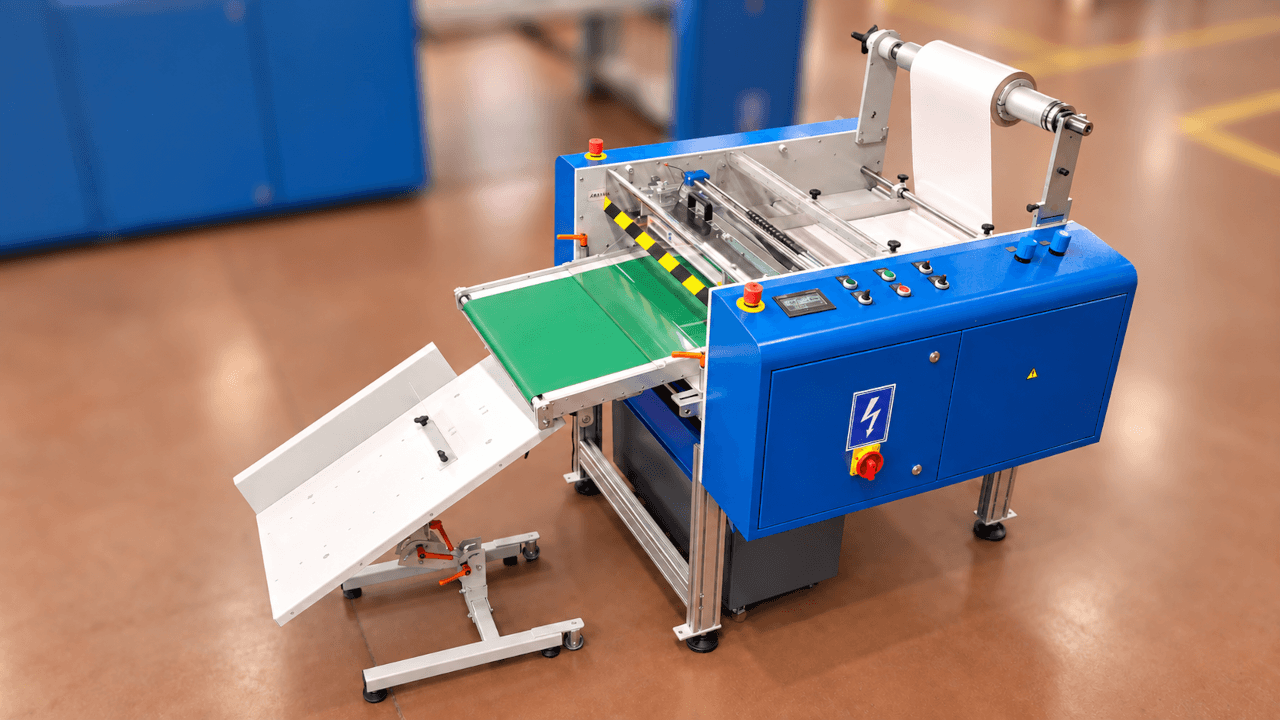
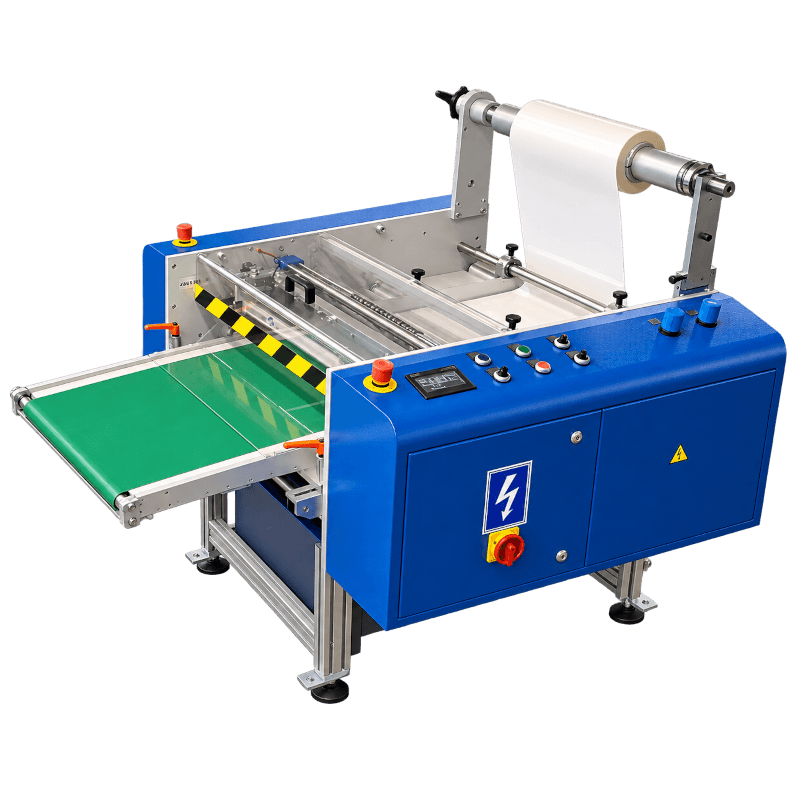
CT25 is an automatic cross cutter designed for cutting web material into sheets and for separating sheets after double-sided lamination.
The machine performs a roll-to-sheet process, automatically unwinding material from a roll or transporting an incoming web and making consecutive cuts either to a preset length or according to printed marks.
The CT25 automatic roll-to-sheet cutter can operate as a standalone production machine or as part of an integrated production line. Cutting can be controlled either by a preset sheet length or by printed marks detected by a sensor.
Predefined programs provide several cutting modes, including cutting according to printed marks, cutting before or after a mark, cutting between double lines, and completely removing the area containing the marks.
As standard, the material roll is mounted on a fixed shaft with a mechanical brake. Optionally, the CT25 can be equipped with an expanding shaft with an electromagnetic brake.
Web tension during unwinding is stabilized by a dancer system, which compensates for changes in material tension and eliminates slack occurring during unwinding. This ensures stable web transport and repeatable cutting conditions.
The cutting unit is servo-driven, providing precise synchronization between the cutting cycle and material transport.
The machine is equipped with a Mitsubishi operator panel with a touch screen. The operator can select the required operating mode and set the corresponding process parameters directly from the control panel.
An optional web buffer allows the CT25 to operate in line with other equipment, such as a laminator or printer. The buffer compensates for temporary differences in operating speed between the connected machines and ensures stable web feeding to the cutter.
Ordering a custom machine design allows scaling the device and expanding features and equipment to meet specific needs.
Contact us to discuss your unique requirements.
Product Photo Gallery
Watch a video demonstrating the device